What It Means for Your Electricity Bill and Your Next AC
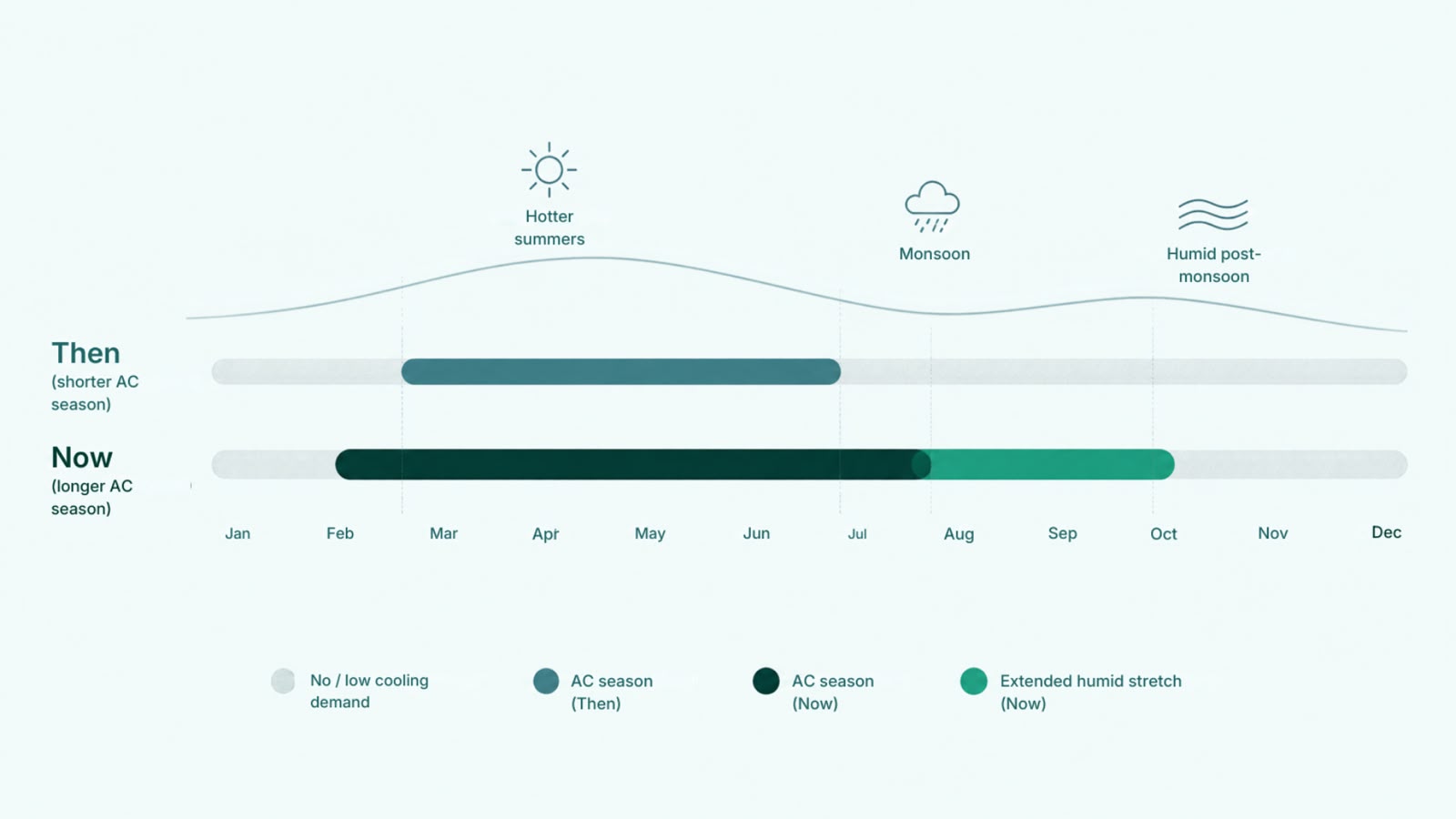
For decades, India’s cooling season followed a predictable rhythm: units switched on in March, ran hard through summer, and switched off once the monsoon arrived in July. Household energy studies confirmed this pattern : AC-driven electricity use was concentrated in a tight four-month window and dropped sharply once the rains set in.
That calendar no longer holds.
Heatwaves are arriving earlier, with parts of Rajasthan, Maharashtra, and Gujarat regularly experiencing temperatures above 40°C during summer. At the same time, monsoons are becoming less predictable, while high humidity can persist before and after the rains. The traditional March-to-July cooling calendar is becoming less reliable, and in many parts of India, heat and humidity can persist well beyond peak summer, extending the period in which households need cooling.
Why Is the AC Season Getting Longer in India?
In some parts of India, cooling demand now extends well beyond the traditional summer months. There are five key factors behind this shift:
- ●Unpredictable monsoons - The arrival and intensity of the monsoon can vary significantly from year to year. Even when temperatures begin to fall, periods of high humidity can make the weather feel uncomfortable, keeping people reliant on air conditioning beyond the peak summer months.
- ●Post-monsoon humidity - A drop in temperature doesn’t always mean a drop in discomfort. High humidity can make moderate temperatures feel hotter because it reduces the body’s ability to cool itself through evaporation - that’s why an evening in September or October can still feel uncomfortable enough to reach for the AC, even when temperatures are lower than they were in May.
- ●Urban heat islands - Concrete, asphalt, dense construction and reduced vegetation allow cities to absorb and retain more heat than surrounding areas. This urban heat island effect can keep built-up areas warmer for longer, making cooling necessary even after temperatures elsewhere begin to fall.
- ●Rising baseline temperatures - As global temperatures rise, seasonal weather patterns are changing too. Hotter periods can arrive earlier, last longer and extend further into months that were traditionally considered part of the shoulder season - the definition of the “AC season” is becoming increasingly difficult to pin to a few summer months.
- ●Rising AC affordability - As air conditioners become more accessible and household incomes rise, more people have the option to use cooling when temperatures and humidity become uncomfortable, rather than simply putting up with the heat.
What’s the Real Cost of a Longer AC Season in India?
A longer cooling season isn’t just about higher electricity bills. It also puts greater pressure on the systems that power our homes and cities:
- ●Grid strain - Electricity demand rises sharply during periods of extreme heat as more households turn to air conditioning and other cooling appliances. When cooling demand extends across more months, the pressure on the electricity system can also last for longer.
- ●Fossil fuel dependence - India’s electricity grid still relies heavily on coal, particularly during non-solar peak demand hours. In April–June 2026, coal-based generation accounted for 69.54% of electricity supplied, while coal provided around 75% of generation during non-solar peak demand hours - that makes energy efficiency increasingly important as cooling demand grows.
- ●Indoor air quality - Air conditioning can provide important relief during extreme heat, but indoor air quality depends on ventilation, filtration and regular maintenance. As AC use extends across more months, keeping filters clean and ensuring the system is properly maintained becomes increasingly important.
AC Is No Longer a Summer Appliance
If an AC is being used for much more of the year, the way we evaluate it has to change.
It’s no longer enough to ask:
“How cold can it get?”
We need to ask:
How efficiently can it cool?
How reliably can it run?
How much will it cost to operate?
Is it built for the conditions it’s going to face?
This changes practical buying decisions too. Instead of treating an AC as an appliance that needs to survive a few intense months, buyers increasingly need to think about efficiency, durability and reliability over a longer period of use.
This changes practical buying decisions too. Instead of treating an AC as an appliance that needs to survive a few intense months, buyers increasingly need to think about efficiency, durability and reliability over a longer period of use.
The bigger takeaway is simple: the conditions under which Indians use ACs are changing. The way we evaluate ACs needs to change with them.
What should you look for in an AC for India’s longer cooling season?
If your AC is expected to work for much of the year, it needs to be built for that reality, not just a short summer sprint. Here’s what to check for:
- ●High ambient performance - Look for an AC designed to perform in high ambient temperatures. Helium Air is designed for cooling performance at temperatures of up to 52°C, helping it handle the extreme heat experienced across parts of India.
- ●Strong ISEER rating - When an AC runs for several months of the year, efficiency becomes even more important. ISEER, or Indian Seasonal Energy Efficiency Ratio, helps understand how efficiently an air conditioner performs across a range of operating conditions - a higher rating of 4 and above can help reduce electricity consumption over the lifetime of the AC.
- ●Lower running cost - With a longer cooling season, running cost becomes just as important as the upfront price. Helium Air has an ISEER rating of 4.4 and an annual electricity consumption of approximately 475.4 kWh, with an estimated running cost of approximately ₹30 per day. When you’re using an AC for longer periods, even small differences in daily consumption can add up over time.
- ●Long compressor warranty - A compressor working most months of the year needs to be built for the long haul, not a typical 1-2 year seasonal warranty. With a 10-year compressor warranty, Helium Air is built for long-term ownership.
- ●Real-time consumption tracking - For Indian households, electricity bills are often a monthly budgeting exercise. Helium Air’s real-time consumption tracking lets you see how much electricity your AC is using, instead of waiting for the bill to arrive.
- ●Early diagnostics - Helium Air can alert users to potential issues such as gas leakage, helping identify problems earlier and simplifying maintenance.
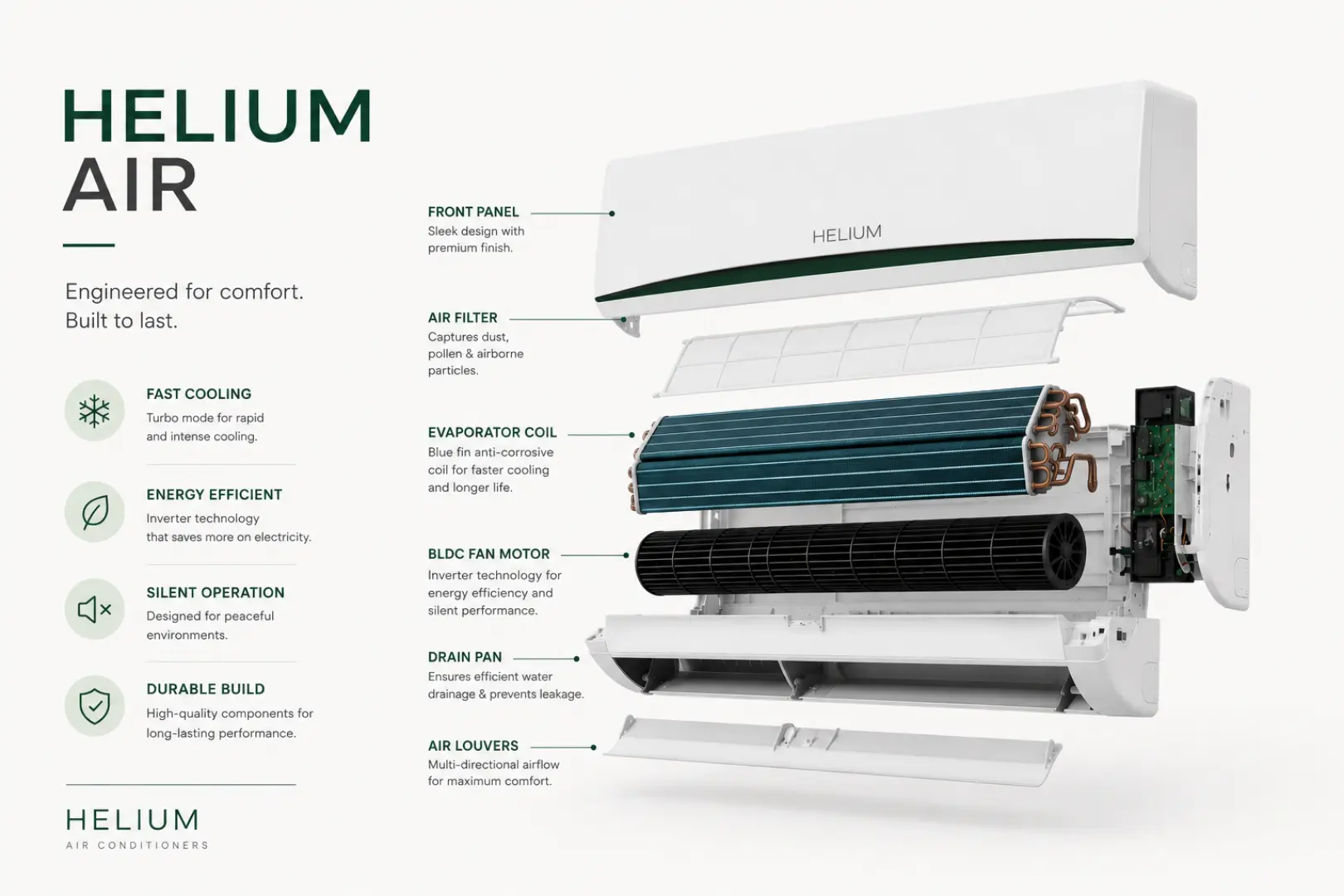
- ●Built for sustained use - When an AC is expected to work for much of the year, durability matters as much as efficiency. Helium Air uses components including full-copper coils, Blue Fin coating and a BLDC motor, designed to withstand the demands of India’s hot and humid conditions and support reliable performance season after season.
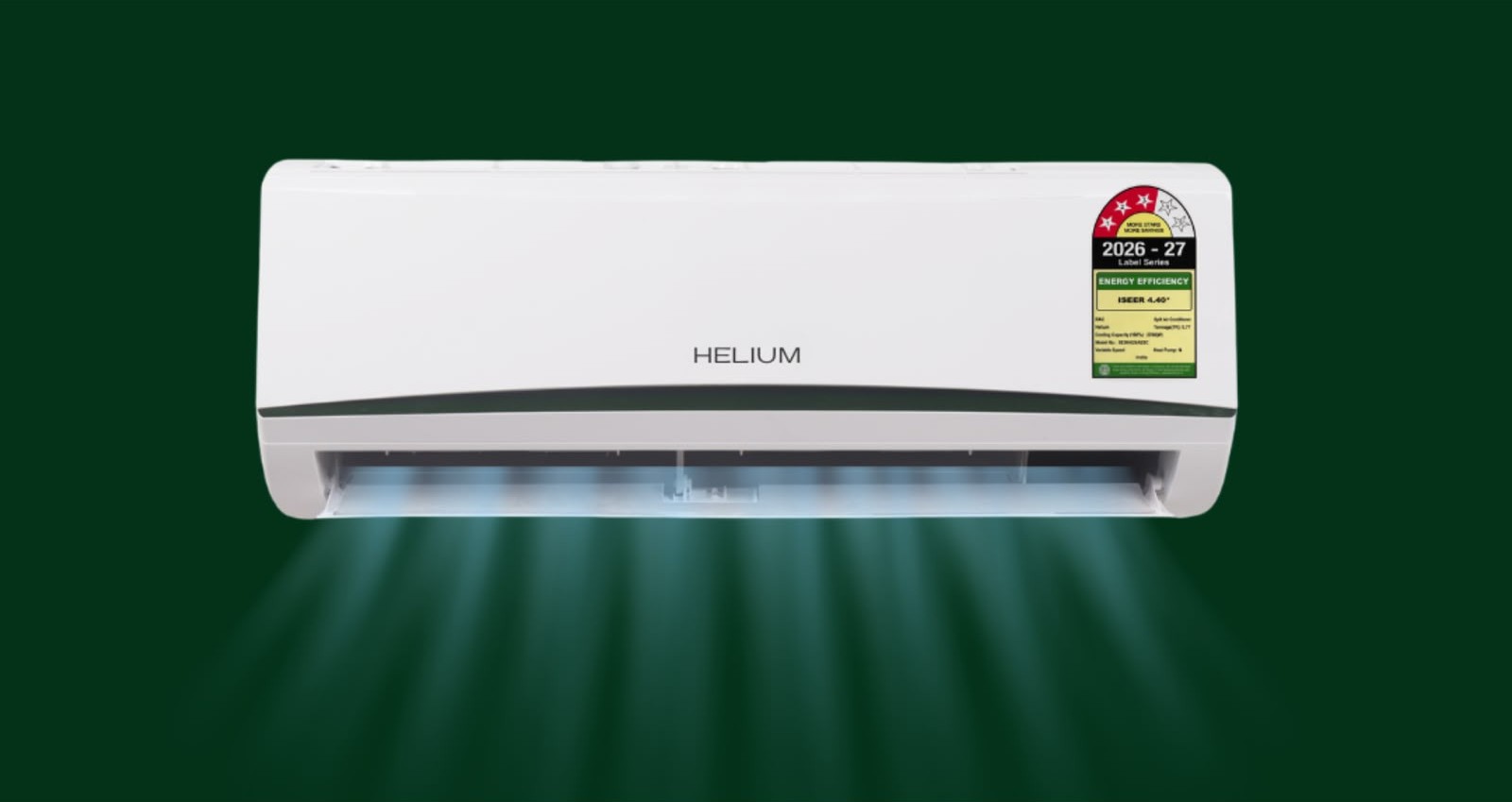
Helium Air Is Built for India’s extended cooling season
India’s cooling needs are changing. As heat, humidity and unpredictable weather extend the period in which homes need cooling, the AC itself needs to keep up.
Helium Air brings together high-ambient performance, energy efficiency, smart monitoring and durable engineering, designed around the realities of modern Indian homes.
FAQs
Q. Why has India’s AC season gotten longer?
Earlier and more intense heat, unpredictable monsoons, lingering humidity, urban heat islands and rising baseline temperatures can all extend the period in which households need cooling beyond the traditional summer months.
Q. When is the best time to buy an AC in India?
The January-March period can be a practical time to compare and purchase an AC before peak summer demand begins. More importantly, look for an energy-efficient model that’s suited to your room size, local climate and expected usage.
Q. Does running an AC for longer significantly increase electricity bills?
It can. The longer an AC operates, the more electricity it can consume, which makes efficiency, usage patterns and running cost increasingly important. Choosing an efficient AC and using it wisely can help manage electricity consumption.
Q. What should I look for in an AC if I’ll use it most of the year?
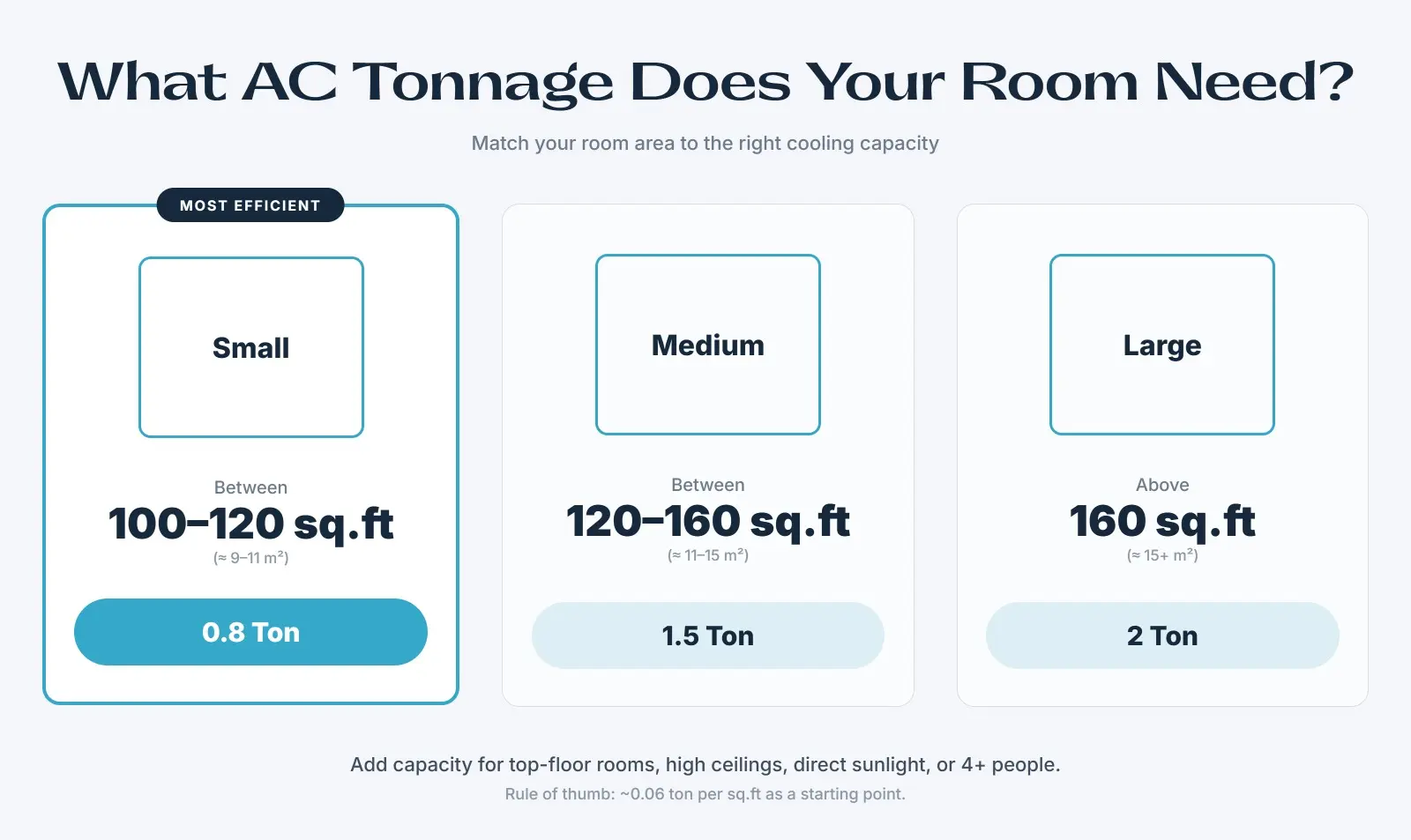
Prioritise the right cooling capacity for your room, a strong ISEER rating, high-ambient performance, a long compressor warranty, real-time power consumption tracking and durable components designed for India’s climate.