Is an Air Conditioner a Luxury or a Necessity in India in 2026?
Air conditioning in India is no longer simply a marker of urban affluence. As summers become hotter and heatwaves more frequent and prolonged, cooling is increasingly becoming a basic requirement for staying comfortable and, in extreme heat, for protecting health and productivity. But that shift is far from uniform. In India’s hottest states and in many tier-2 and tier-3 cities, the need for cooling can be just as acute as in major metros, while AC ownership remains much lower. The gap is less about whether households need cooling and more about whether they can afford the upfront cost of an AC, the electricity bills that come with running it, and homes equipped to support one. For decades, an air conditioner in an Indian home was a status symbol installed once a family could afford it, run sparingly to save on electricity, and treated as an occasional comfort rather than daily equipment. That framing held up while AC penetration sat below 10% nationally versus roughly 90% in the US and 60% in China; summers were a predictable 3-4 month window, and electricity costs made constant cooling feel indulgent.
Is AC a Luxury or a Necessity in India?
AC is transitioning from luxury to necessity in India, unevenly: faster in cities and among higher-income households, and slower in hotter, lower-income regions, where the need for cooling is often greatest but affordability remains a constraint. Ownership remains low enough that air conditioning cannot yet be called a universal household necessity. But in India’s hottest regions, where prolonged periods of extreme heat can pose significant health risks, cooling is increasingly a necessity in functional terms creating a gap between what households need and what they can afford.
What This Means When Buying an AC in 2026?
If cooling is moving from occasional indulgence to daily-use equipment, the appliance needs to be evaluated differently too. Five things that matter when purchasing an AC to beat the heat:
- ●Energy efficiency (ISEER rating): matters far more when the unit runs beyond summer months.
- ●High-ambient performance: the ability to cool effectively at 45-50°C, not just under standard test conditions.
- ●Long compressor warranty: necessity-grade equipment needs necessity-grade backing, not a short seasonal warranty.
- ●Running-cost transparency: daily and monthly cost matters once AC becomes a year-round budget line, not a splurge.
- ●Smart monitoring and safety features: gas-leak detection and machine-health alerts save from unnecessary expense.
Where Helium Air Fits In
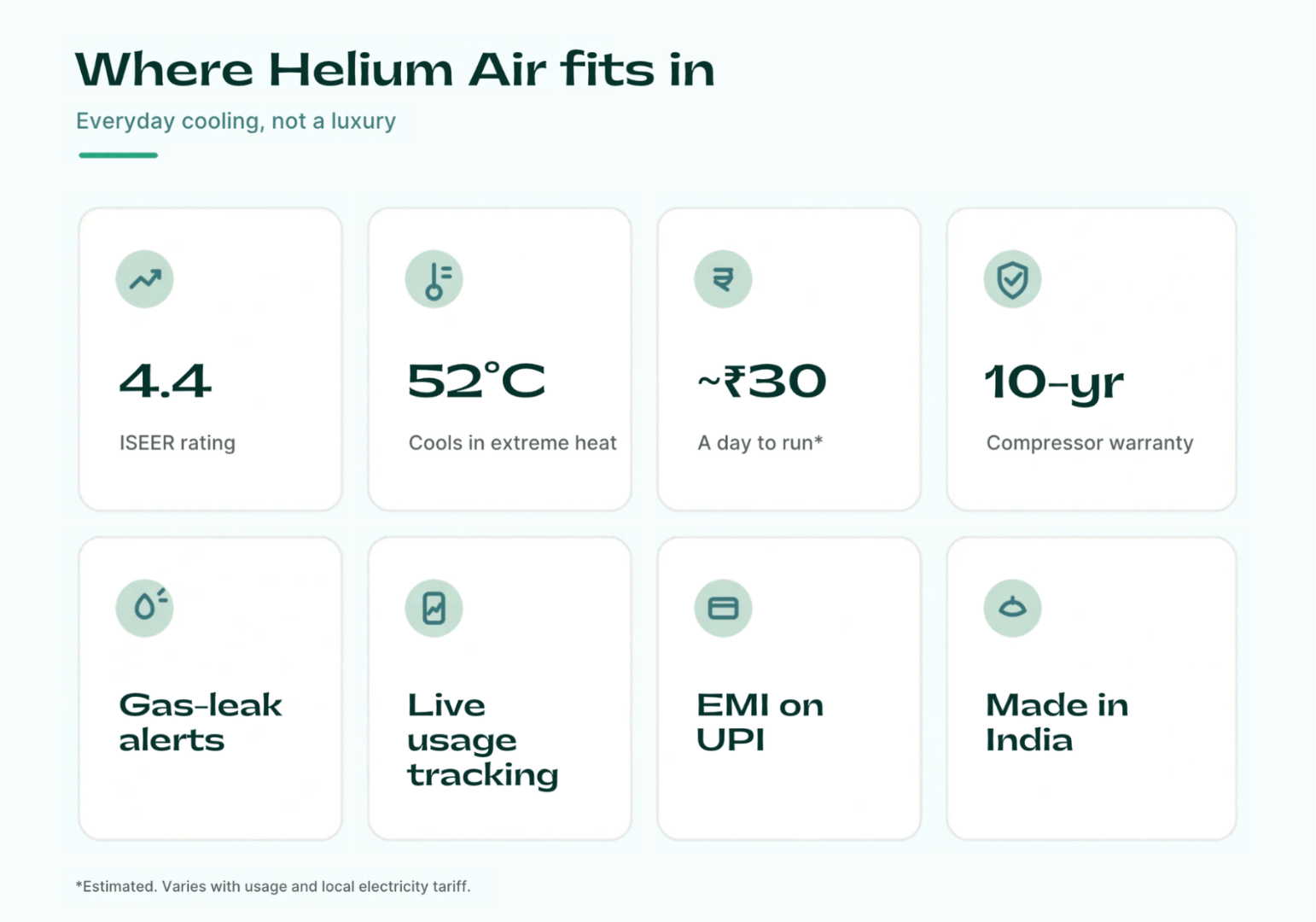
Helium Air is designed to fit every household and make AC accessible easily and in a widespread manner:
- ●4.4 ISEER rating (2026-27 BEE label) - Built for households that rely on their AC for much more than just a few peak summer months, the high 4.4 ISEER rating delivers excellent energy efficiency while maintaining dependable cooling, helping reduce electricity bills.
- ●High-ambient operation up to 52°C - Designed specifically to handle India’s increasingly intense summers, the AC continues to deliver effective cooling even when outdoor temperatures rise to an extreme 52°C. This makes it well suited for regions experiencing hotter summers and longer, earlier-arriving heatwaves.
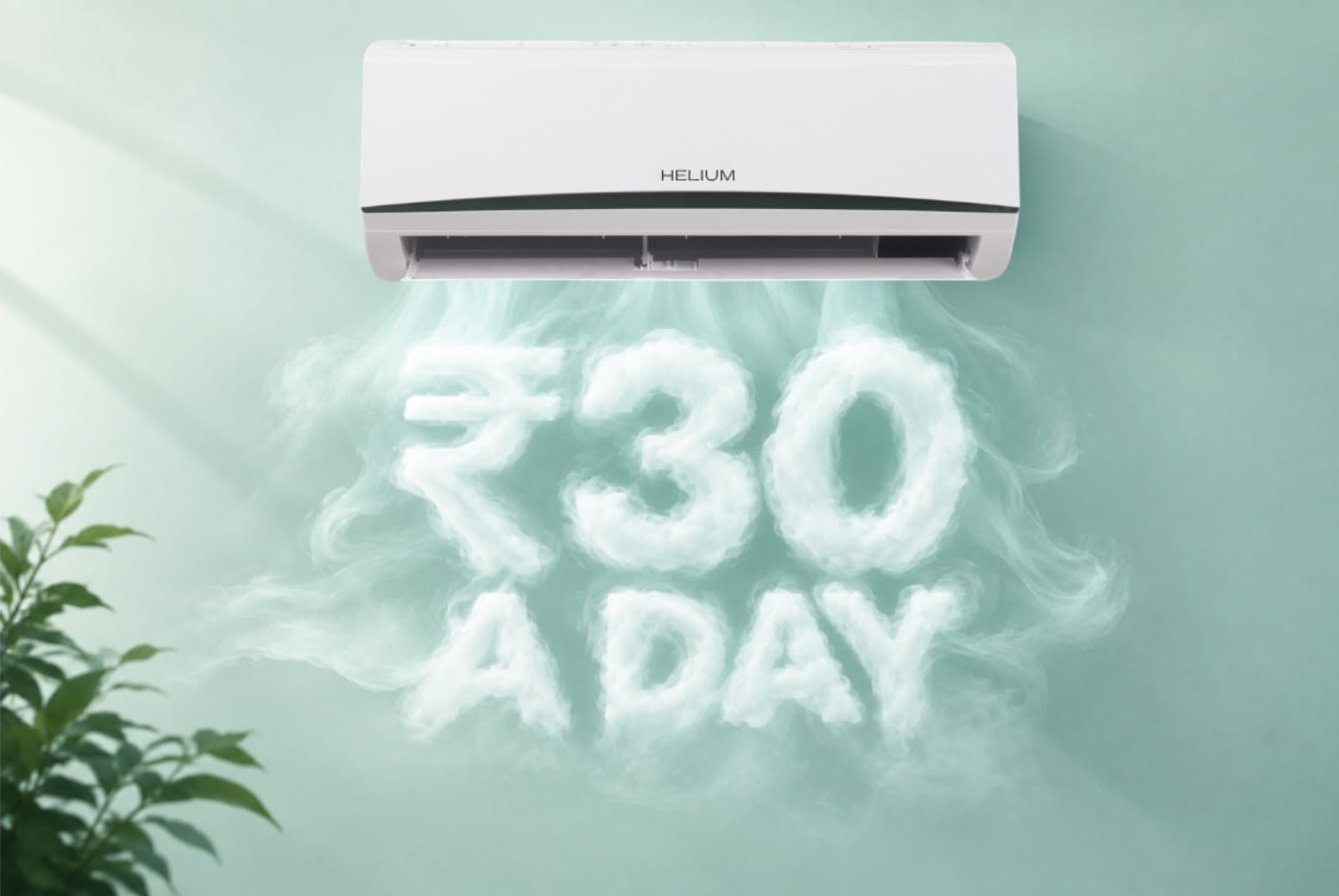
- ●Runs at roughly ₹30/day - Engineered with everyday affordability in mind, the AC is designed to keep running costs around ₹30 per day* , helping households enjoy consistent cooling without turning electricity bills into a major financial burden. It positions comfortable cooling as an everyday necessity rather than an occasional luxury.
- ●Long-term compressor warranty - The compressor is the heart of the AC, and with 10-year warranty it reinforces the product’s durability, reliability, and dependable performance over the years.
- ●Auto gas-leak detection and machine-health diagnosis - Advanced monitoring features continuously help identify potential gas-leak issues and assess the overall health of the machine. This added layer of intelligent diagnosis is designed to make everyday AC ownership safer, more convenient, and less dependent on waiting for a problem to become noticeable.
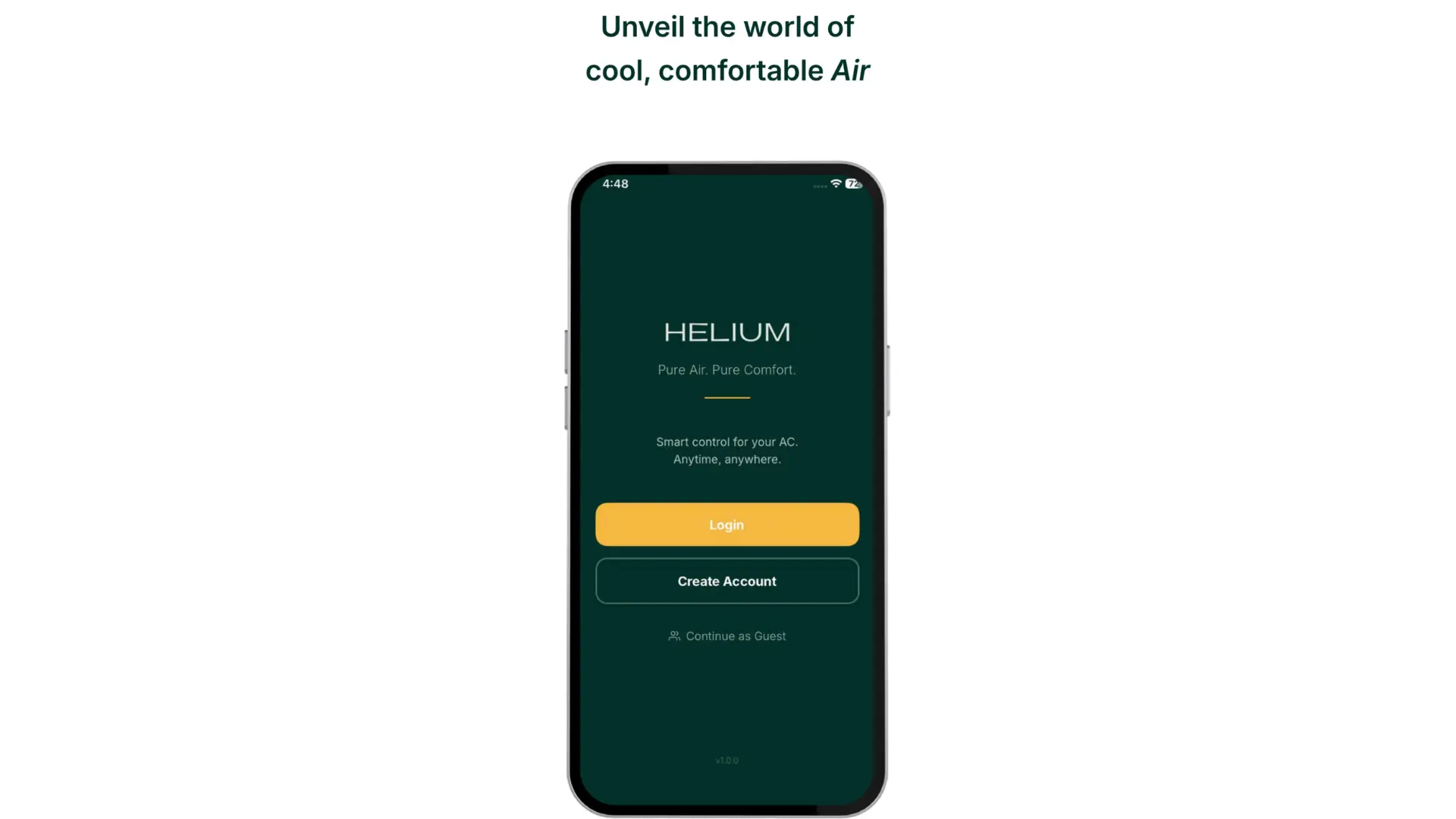
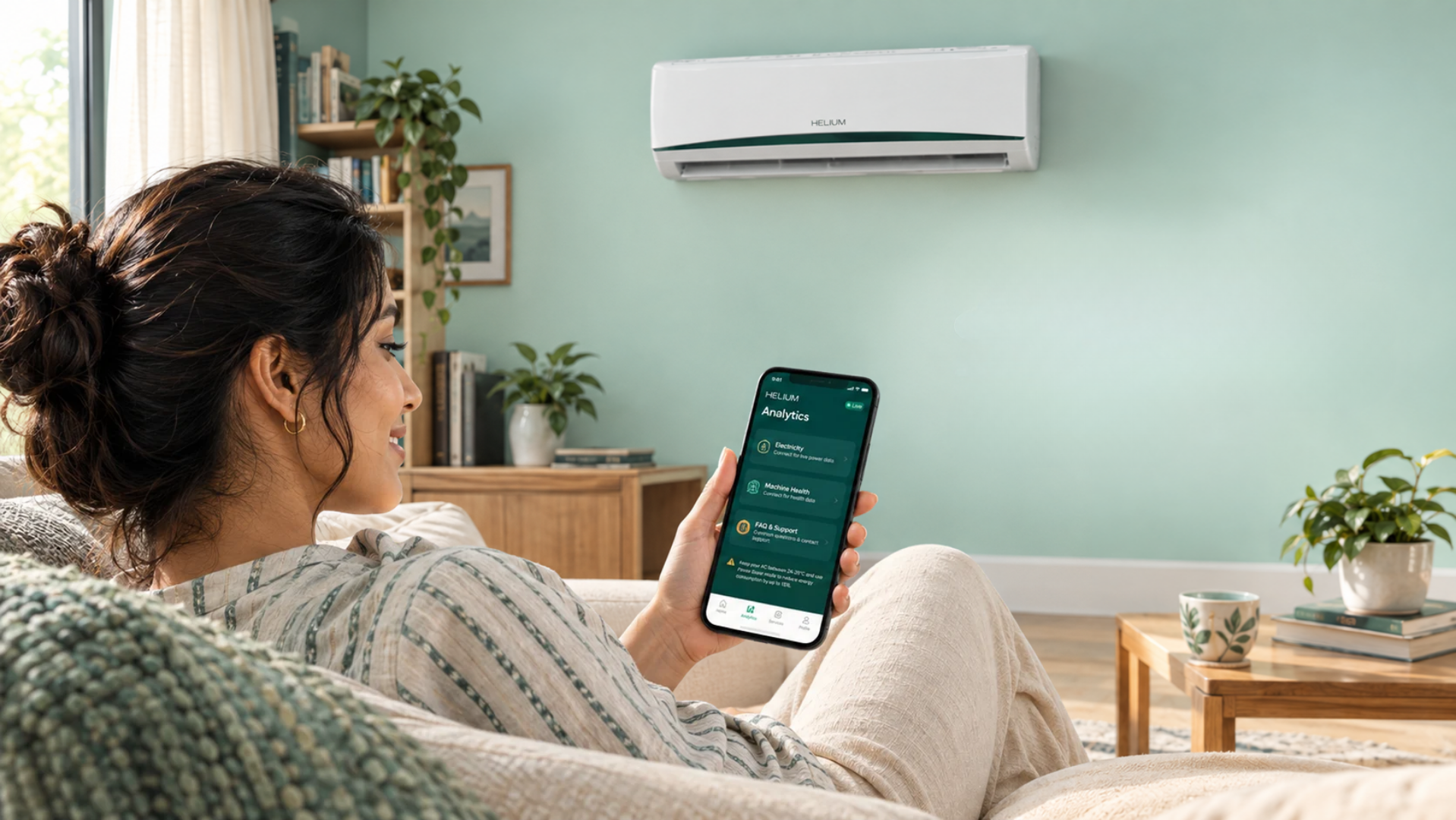
- ●Helium App with real-time electricity tracking - The Helium App gives users greater visibility into how their AC is performing and how much electricity it is consuming. With real-time tracking, households can better understand their cooling costs, monitor usage patterns, and make more informed decisions when running their AC for extended periods.
- ●EMI on UPI - The EMI-on-UPI option helps reduce the upfront financial barrier to AC ownership. This makes it easier for households, particularly in India’s hotter and more price-sensitive communities, to invest in reliable cooling without having to bear the entire purchase cost at once.
- ●Made in India - Designed and manufactured with Indian conditions in mind, the AC is engineered to address the country’s unique combination of high temperatures, humidity, dust, and varying climate conditions. Rather than simply adapting a product designed for another market, it is built with the realities of Indian homes and Indian summers at the centre of its design.
FAQs
Q. Is an AC a necessity or a luxury in India?
It’s becoming a necessity, but unevenly. National ownership is still under 25% of households, yet ownership is rising fastest in the states facing the most extreme heat - evidence that the barrier is affordability, not need.
Q. What percentage of Indian households own an AC?
Roughly 24% nationally, about 40% in urban areas and 15% in rural areas, as of the most recent national survey data.
Q. Which Indian states have the lowest AC penetration despite high heat?
Odisha, Bihar, West Bengal, and Uttar Pradesh report AC penetration of just 5-15%, despite being among the states most exposed to extreme heat. Punjab, by contrast, is near 70%.
Q. Why are doctors calling AC access a health issue?
Because reliable cooling reduces heat stress and protects vulnerable groups - the elderly, children, and people with cardiac or respiratory conditions during extreme heat events, where access can be life-saving.
Q. What should I look for in an AC if I plan to use it most of the year?
Prioritise a high ISEER rating for efficiency, high-ambient performance (cooling at 45-50°C), a long compressor warranty, transparent running costs, and safety features like gas-leak detection - the same criteria that apply to any appliance you depend on daily rather than seasonally.
Q. Will India’s AC ownership keep rising?
Industry analysts expect the market to roughly double by 2030, following a trajectory similar to China’s, where urban AC penetration went from 5% to nearly 100% in 15 years.